About Neuwirth


Biography

 
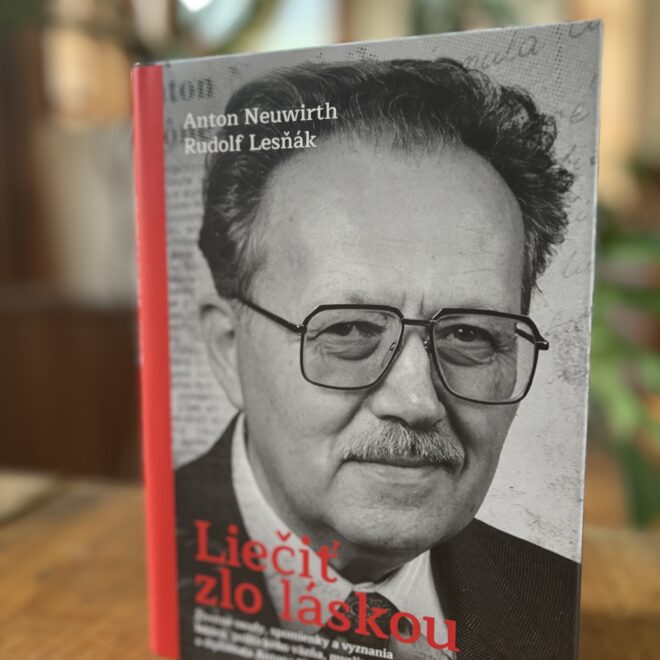
MUDr. Anton Neuwirth was born in 1921 to a Roman-catholic woman and a neological Jew within a Slovak-German-Hungarian family. As he often emphasized, his family environment was a “school of religious and national tolerance”. After completing Jewish elementary school in Slovenske Kapusany and Real Gymnasium in Zilina and Prievidza he enrolled in the medical school of Comenius University in Bratislava. He graduated with a doctor of medicine degree (MUDr.) in 1946.

During his studies Anton Neuwirth became involved with the Rodina (Family) Fellowship led by Croatian priest Prof. Kolakovič during World War II. This meeting occurred during the first totalitarian and became a key for the evolution of Neuwirth´s social engagement during the second totalitarian regime. As Anton Neuwirth recalled, “Kolakovič was for us the spearhead in the Church´s social teaching. He was the first to identify the Church as a social factor with social issues as its priority. Before him there was no effective interference by the Church into social structures; it was so innovative that many, including president Tiso, came to see him as a ‘red agent’ and it was very hard to persuade them that he was not.”
This Fellowship that Prof. Kolakovič established endured both totalitarian regimes and became one of the centers of the underground church during the Communist regime.

A year after finishing his studies Neuwirth married Eva Admkova and joined the Institute for Medical Chemistry at the medical school of Comenius University. Later as a scientist he won a scholarship to work with Prof. Karrera, a Nobel Prize laureate, in Zurich where he took two additional semesters of chemistry. With Communist upheaval in Czechoslovakia, Anton Neuwirth felt an obligation to come back to his fatherland and fight for the preservation of culture which, under the ruling of the Communist Party, became a target for systematic liquidation.

After his return he was a lecturer in Medical Biochemistry at the medical school at the University of Pavol Jozef Safarik in Prešov. Within a short time of his arrival, Anton Neuwirth was detained and sentenced to twelve years in prison for “treason and espionage”. He was imprisoned in Ilava and Leopoldov. After amnesty in 1960 he worked as a medical doctor in Zilina and as the chief doctor at the Department of Clinical Biochemistry in Cadca and the University Hospital in Martin, where he took part in many scientific research activities.

After the fall of Communism, Neuwirth was involved in the establishment of the Christian Democratic Party in Slovakia. He became an MP to the Slovak National Council and an honorary chairman of the Christian Democratic Movement. He was also served as a journalist and lecturer on ethical, medical, political, and intellectual culture issues. From 1994-1998, he was an ambassador to the Holy See in Rome.

Neuwirth died in 2004 in Bojnice.


 "For us Anton Neuwirth was the model of the thinking and comprehensive conservative politician.  He had immense life experience and was a tolerant and ecumenical man. We are always glad to recall the discussions that he led with noblesse and grandiosity reminiscent of the first republic. There is a void left after the loss of his prudent voice."

 Peter Zajac (literary critic) and Ondrej Dostal (sociologist, conservative journalist)